What Is a Policy Ownership Record?
Published September 23, 2026 · 2 minute read · General information, not legal advice. Your licensing regulators decide what applies to you.
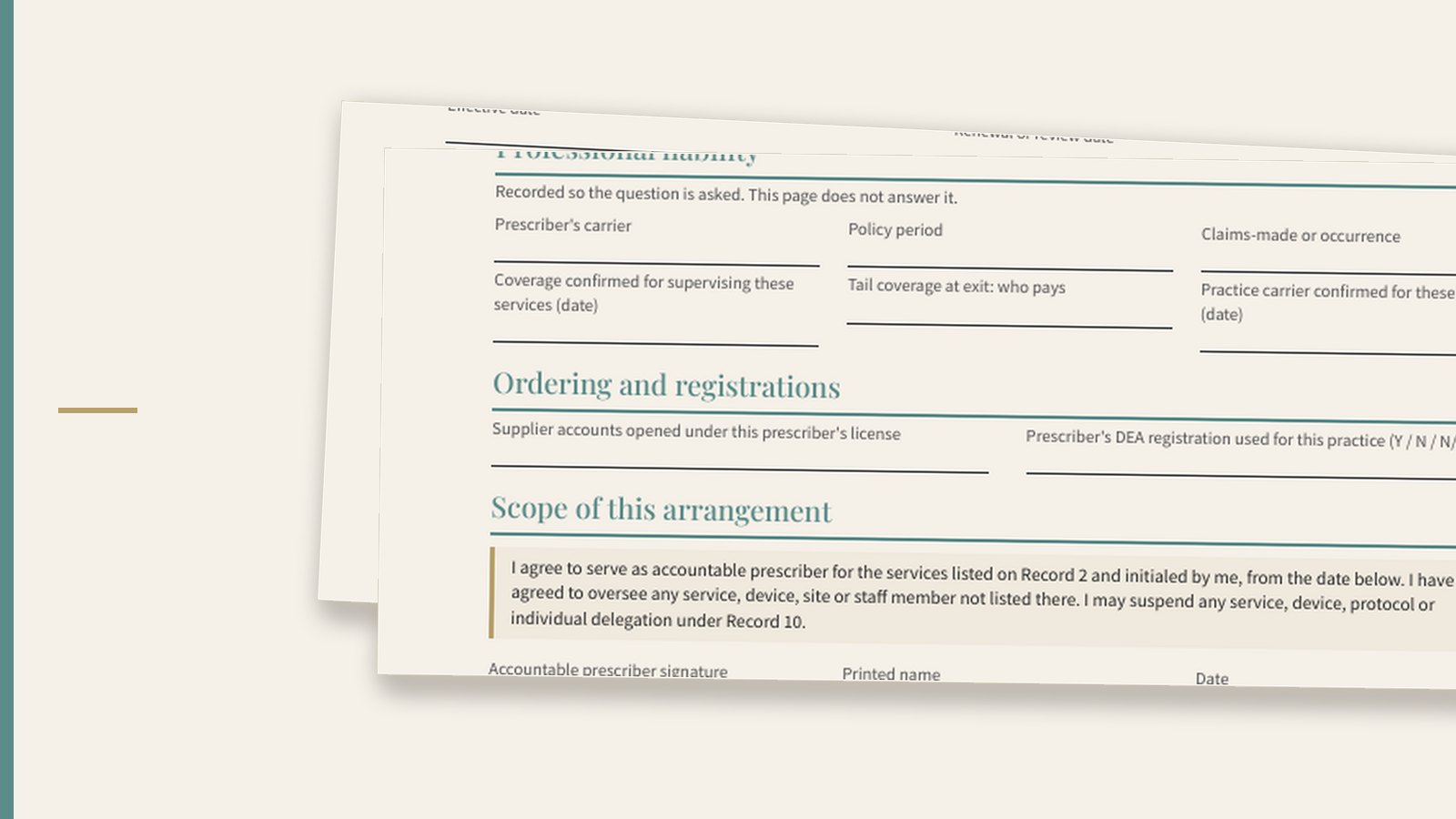
A policy ownership record is a table listing each practice policy with the person who drafts it, the person who reviews it, the person who signs it, and the person who maintains it between reviews. A policy without a named owner tends to go stale. The record makes ownership explicit so every policy has someone responsible for keeping it accurate.
Four roles, not one
Ownership is often treated as a single role, but most practices need four. The drafter writes the content. The reviewer checks it against the practice's verified requirements and, for clinical content, the accountable prescriber's decisions. The signer puts their name on it. The maintainer watches for triggers that require an update. One person can hold several roles. The point is that each role has a name.
Who fills the roles
This record does not say who should hold each role. That depends on the practice's structure, agreements, and verified requirements. Where the answer is not known, the role is left blank and the question goes on the open questions register.
Get the Clinic Opening File
A free print-and-fill file for owners getting ready to open: a workstream index, an open items register, a document inventory and an opening day go or no-go record. It comes by email, along with each new guide when it publishes.
Sent by Scope & Standard through beehiiv. Every email has an unsubscribe link. See Privacy.
Maintenance triggers
The maintainer's job is easier when triggers are listed. Typical triggers include a service change, a staffing change, a new verification answer, a software change, and an incident. When a trigger occurs, the maintainer flags the policy for review even if its scheduled date has not arrived.

What to record
- Policy name and revision number
- Drafter
- Reviewer
- Signer
- Maintainer
- Maintenance triggers
- Last review date and next review date
The verification method this supports is in How to Verify What Your State Actually Requires. For the three review roles in more depth, see who verifies, accepts, and reviews a policy.