Why Keep Drill Records Separate From Disciplinary Records?
Published September 23, 2026 · 2 minute read · General information, not legal advice. Your licensing regulators decide what applies to you.
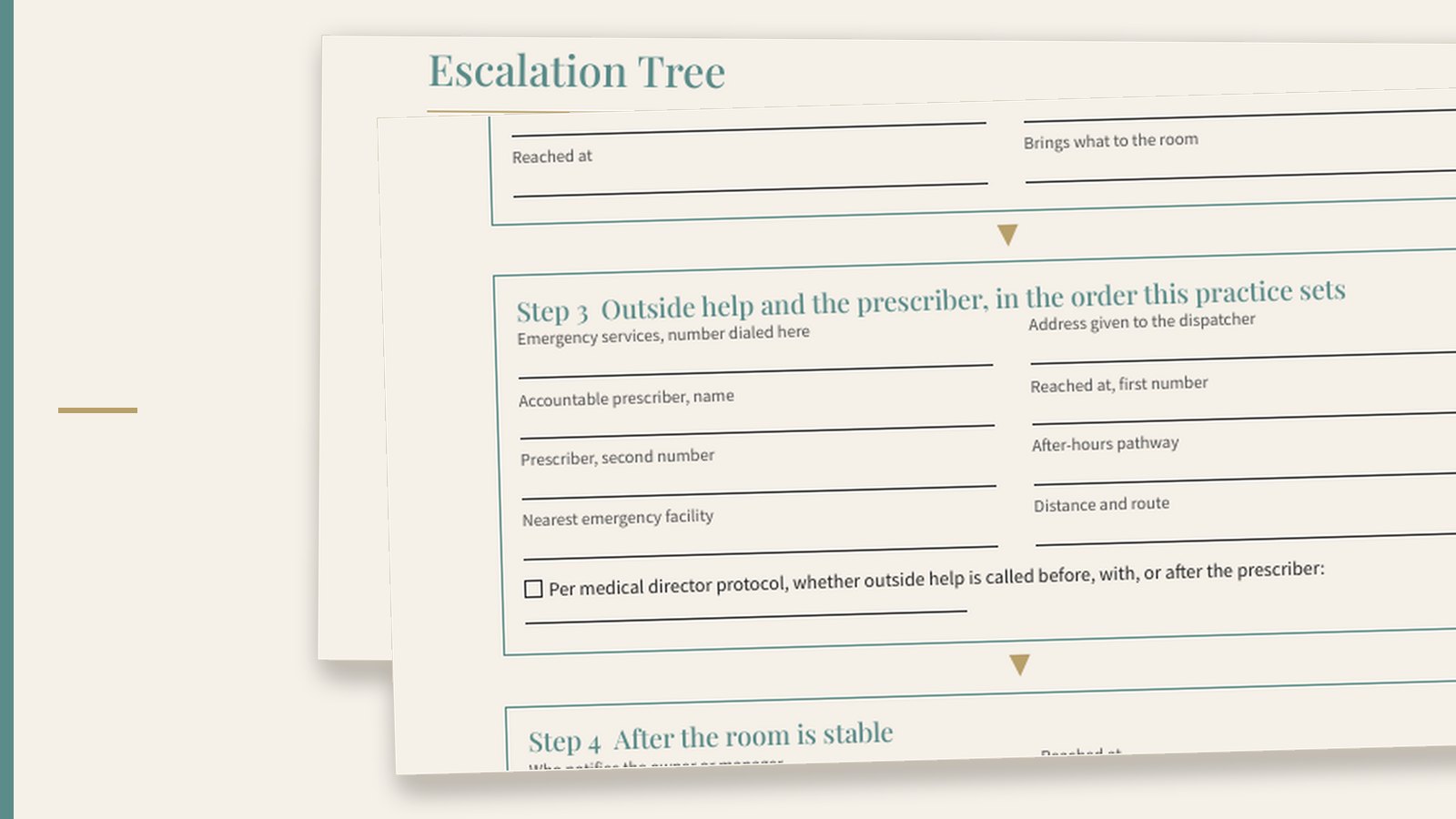
Keep drill records separate from disciplinary or performance records because they serve different purposes. A drill record measures whether the practice's system works: the pages, the kit, the access, the escalation path. A disciplinary record addresses an individual's conduct. When the two mix, staff learn that drills are tests of them rather than tests of the system, and they stop surfacing problems.
What a drill is for
A drill is designed to find failure while the stakes are low. The most useful drills are the ones where something goes wrong: the kit is slow to retrieve, a number is outdated, a page is confusing. Those findings only appear when participants feel free to say what happened.
How mixing records causes harm
If drill results are copied into personnel files, or if drill notes include evaluative comments about individuals, participants have a reason to perform rather than to learn. Findings get softened, and problems stay hidden until a real event.
Get the free Drill Starter
A free print-and-fill file for running one emergency drill and keeping the record that shows it happened: a scenario card, a drill log and a debrief record. It comes by email with the Clinic Opening File, along with each new guide when it publishes.
Sent by Scope & Standard through beehiiv. Every email has an unsubscribe link. See Privacy.
What belongs where
The drill log, attendance record, and debrief record describe the drill, who took part in what role, and what the system needs to change. Competency sign-off and training records are separate documents with their own purpose and process. Any concern about an individual's conduct is handled through the practice's own personnel process, not the drill record.
Writing drill notes
Write findings about the system. "The kit took three minutes to reach the treatment room because it was behind the supply shelf" is useful. A comment about a person's performance is not a drill finding.
What to record in drill records
- Scenario and protocol drilled
- Participants and roles, without evaluation
- Times and retrieval results
- System findings
- Changes made
- Reference to competency records, kept separately
The drill process is described in Your Emergency Protocol Is Not a Protocol Until Someone Has Drilled It. How to write system findings is covered in the drill debrief record.